From Time Series to Operational Intelligence: Synthefy Nori Tabular Foundation Model on InfluxDB
By Ryan Nelson, InfluxDB, and Somi Agarwal, Synthefy
Time series data runs the operational world. Organizing it is the first step. Intelligence is the next step.
Time series data coming off industrial systems, energy infrastructure, financial markets, and modern applications is what real-time operations actually run on. It's the data that tells you whether a machine is healthy, whether a process is in control, whether a transaction is anomalous, whether the grid is stable. Every operational decision worth automating sits on top of it.
But getting value out of this data is a progression, not a single step.
The first step is organizing it. Capturing high-frequency time series at full resolution, contextualizing it at the source with the tags that make it meaningful, retaining it at scale without sacrificing the detail the value lives in. Without this foundation, every question downstream becomes an integration project. For more than a decade, InfluxDB has been building the answer to this layer and has given the world's time series data a home.
The next step is applying intelligence on top of it. Even with the data well-organized, the path from observation to prediction has historically required a long, expensive machine learning project for every optimization. Will this machine fail this shift? Is this batch about to drift out of spec? Which lines across the fleet are showing the early signature of a problem we've seen before? Traditionally answering each of these questions required training a custom model, tuning it, validating it, shipping it, watching it drift, and retraining it on a schedule. For every question. For every line. Forever.
Foundation models change that. A single pretrained model can now answer prediction questions across your data without retraining for each one. Synthefy Nori, now available on InfluxDB, makes it possible.
Synthefy Nori Tabular Model, now running on InfluxDB
Most operational data is tabular data that ends up in tables, rows of assets, batches, or events, with columns of measurements and tags. Predicting something from that table (will this machine fail, is this batch defective, what will demand look like next hour) is the workflow every ops and analytics team runs, and it required training a custom model each time. Synthefy Nori changes that.
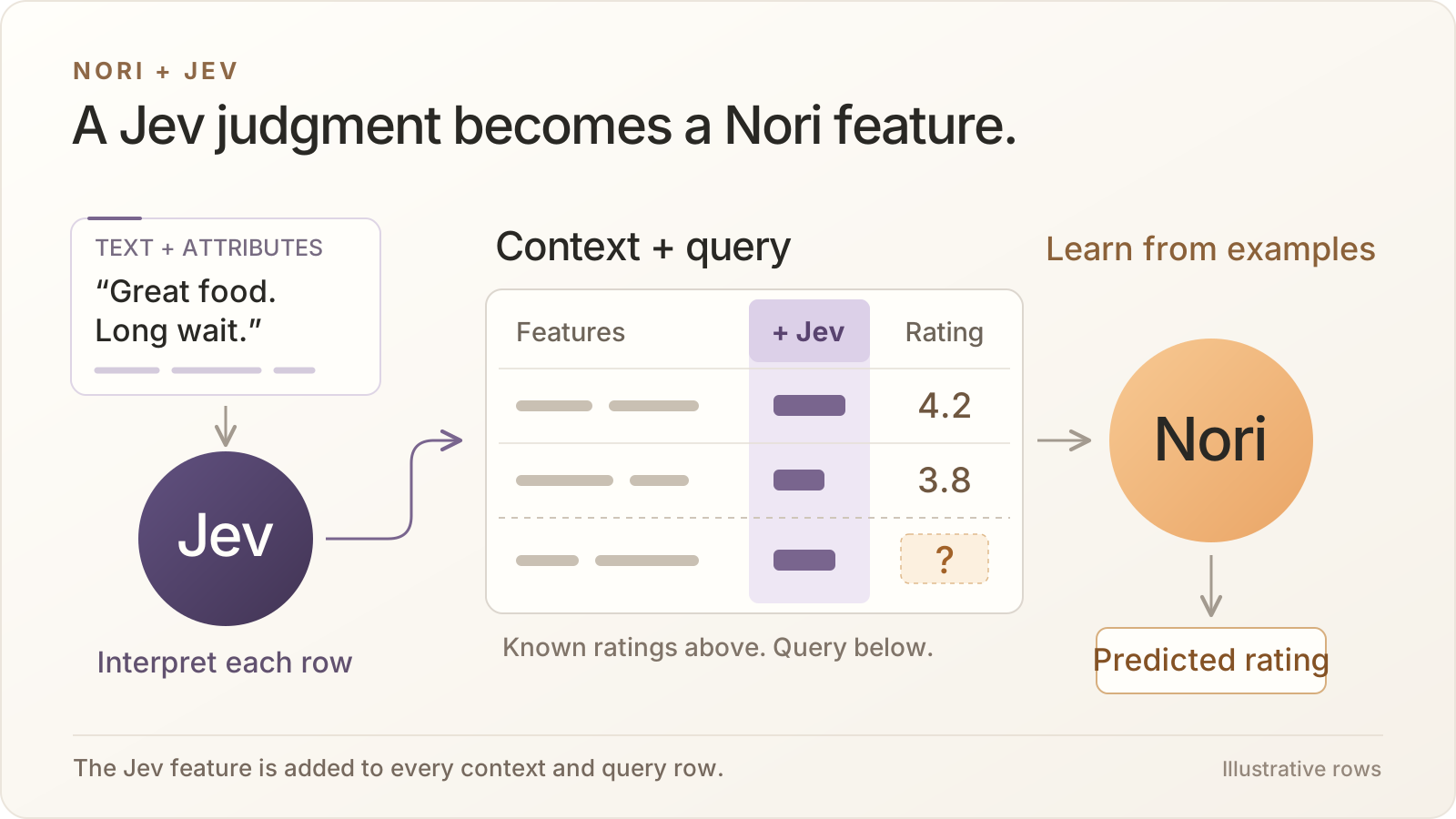
Synthefy Nori is a foundation model for structured data that handles regression and classification across any tabular dataset in a single forward pass. No task-specific training. No hyperparameter tuning. No retraining when patterns shift. You provide labeled examples as in-context data, and the model returns predictions on the unlabeled rows in seconds.
It ranks #1 on aggregate across 130 public regression benchmarks, ahead of the strongest comparable tabular foundation model, at roughly one-tenth the parameter count of its nearest peers. That efficiency enables predictions in seconds without requiring your team to provision GPUs or maintain dedicated ML infrastructure.
Synthefy Nori now connects to InfluxDB. Any team running InfluxDB can use Nori on their time series data directly. No separate ML stack, no data movement, no new tool to learn. The model meets the data where it already lives.
For an industrial team already running InfluxDB, the practical implication is straightforward: predictions on operational data now look like queries against operational data. The pipeline from a sensor stream to a "this machine will fail this shift" prediction no longer requires a parallel ML stack.
Out-of-the-box use cases for industrial teams
The integration is built for the prediction problems industrial operators encounter every day, the questions where the data exists, the value is well-understood, and the historical barrier has been the engineering effort to train a model for each one.
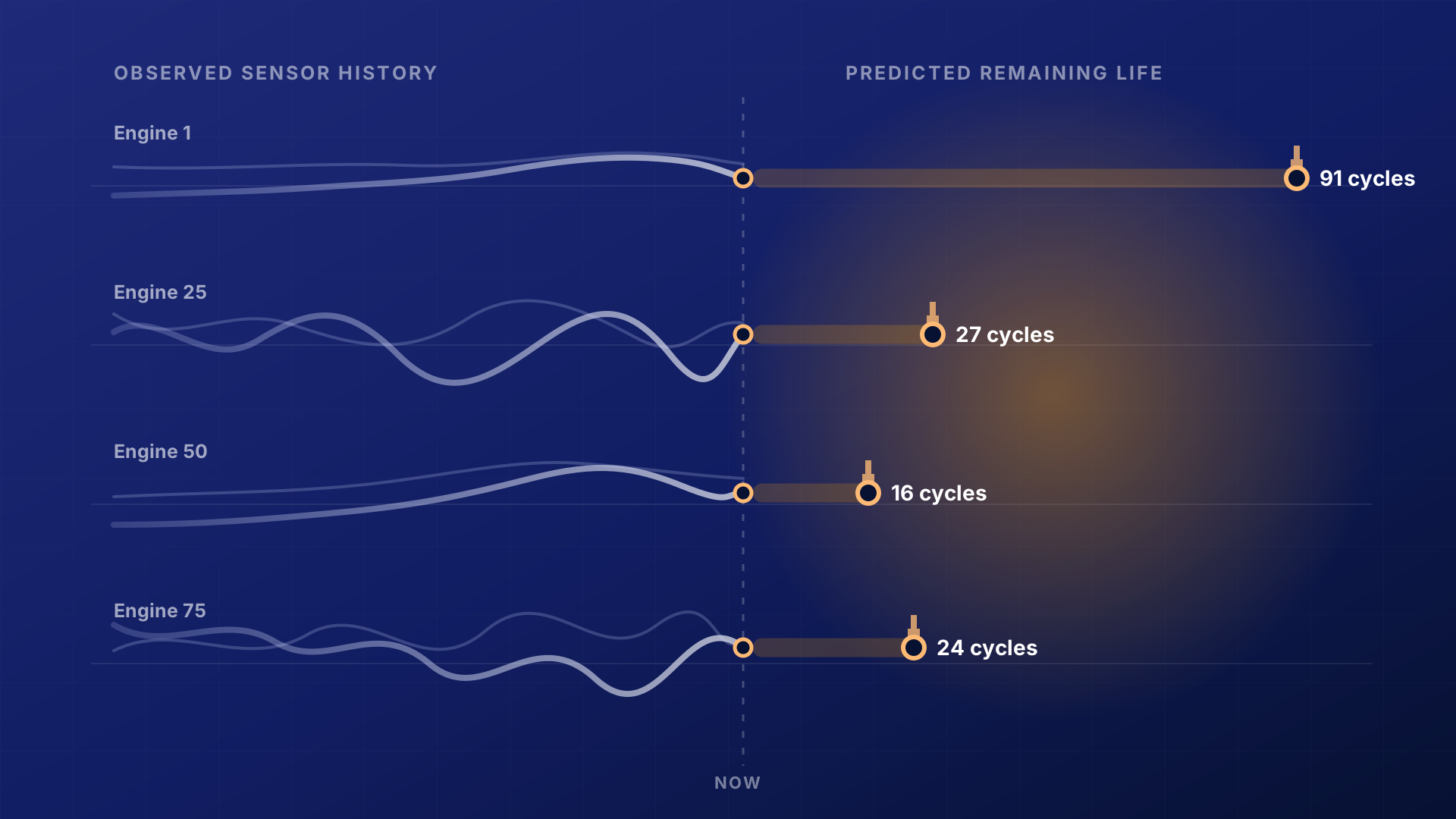
- Physical AI: fault prediction for machines in the real world. A robotics operator runs thousands of autonomous units across warehouses and fulfillment sites, each streaming actuator, motor, and battery telemetry into InfluxDB. When a unit fails mid-shift, it doesn't just stop working, it stops a line. Nori reads the telemetry as it lands and identifies which units are trending toward a fault while there's still time to rotate them out, and because one model sees the whole fleet, a failure signature learned on one robot is recognized on every robot.
- Industrial: predictive maintenance for data centers. A global data center operator runs hundreds of thousands of servers, drives, and cooling units, each streaming telemetry into InfluxDB. A single unplanned failure can cascade into an outage measured in millions per hour. Nori surfaces the degradation patterns that precede failure, across the entire fleet, without training a model per asset class. Maintenance shifts from calendar-driven to condition-driven, and downtime gets caught before it starts.
- Financial services: anomaly detection at transaction scale. A payments platform clears billions of transactions a month, far past the point where per-signal detectors or manual rules can keep up. Nori scores anomalies across the entire transaction stream on the data flowing through InfluxDB, with no need to train or maintain a separate detector for every product, region, and fraud pattern. Transaction data changes shape constantly. New products, new geographies, shifting fraud behavior. A foundation model treats all of it as normal input, which frees the team from writing new rules for every case and lets them focus on what the data is telling them, not how to read it.
- Renewable energy: forecasting for grid dispatch. A grid-scale renewable operator manages hundreds of solar and wind sites, each streaming generation output, weather, and demand signals into InfluxDB. Every 15 minutes, someone has to decide how much power to bid into the market, and being wrong in either direction costs money. Nori runs against the data flowing into InfluxDB and predicts near-term generation across the whole portfolio, factoring in local weather and historical patterns, so bids track what the sites will actually deliver. When conditions shift, the model updates against the fresh data. No retraining, no separate model per site.
These are a few examples of what's possible with InfluxDB and Synthefy. Anywhere an organization makes high-volume predictions on data in InfluxDB, the same pattern applies, and it's available today with Synthefy Nori in front of it.
How it works end-to-end
The Synthefy x InfluxDB pattern fits into existing industrial data architectures without restructuring them.
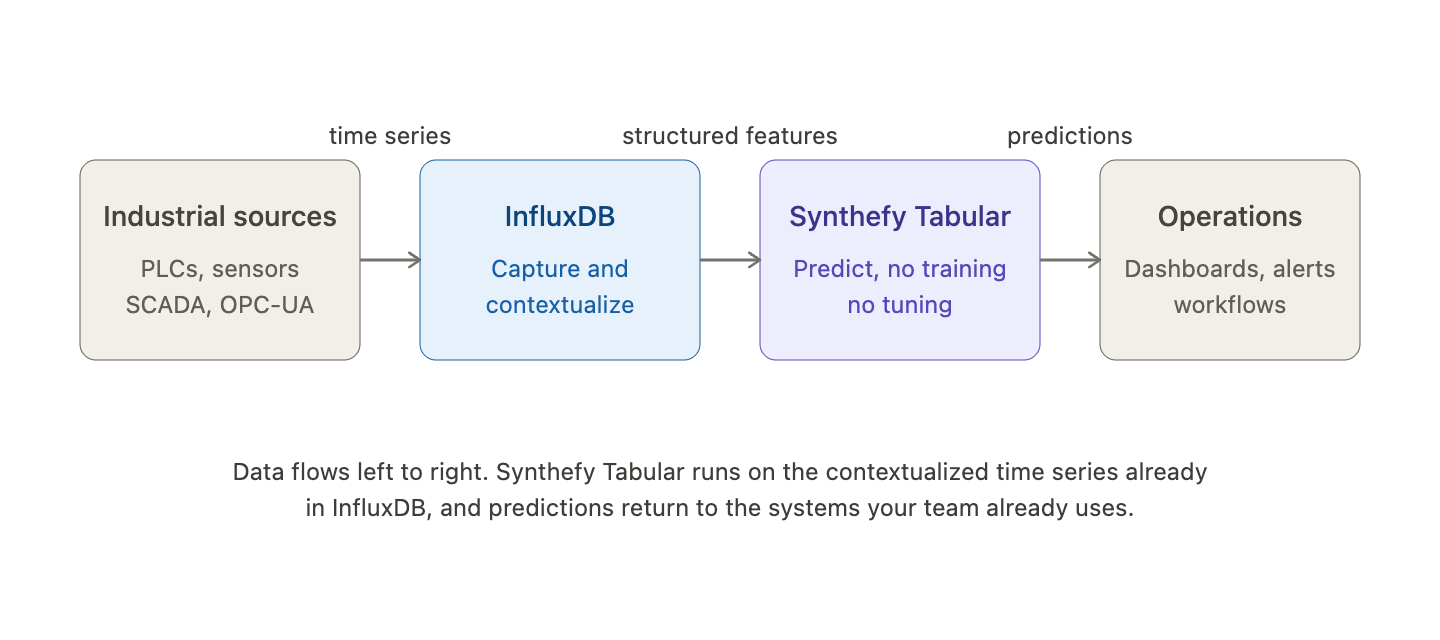
- Capture in InfluxDB: Industrial sources, PLCs, sensors, SCADA systems, write into InfluxDB. Data is contextualized at the source with the tags downstream prediction depends on: asset, line, facility, shift, product, batch.
- Reshape, with a feature query: A query against InfluxDB pulls a structured table. Rows are the entities to predict on (a machine, a line, a batch). Columns are recent measurements plus the contextual tags InfluxDB already attached.
- Predict, with Synthefy Nori: The table goes into Nori as in-context examples. Predictions come back in seconds, with calibrated uncertainty. No training, no model versioning.
- Act, through your existing tools: Predictions flow into dashboards, alerts, and workflows your team already runs. No separate inference layer required.
The Bigger Picture
For decades, industrial operations have been instrumented better than they've been understood. The data is there, in InfluxDB and the systems around it, but most of the value locked inside it has stayed unrealized because getting it out required a machine learning project for every question. Historically, only the biggest problems justified the effort. Everything else, the daily and recurring operational decisions where real margin lives, ran on intuition and outdated dashboards.
Tabular foundation models change what’s possible. When prediction becomes a simple question against the data your team already has, every operational decision worth automating finally becomes one worth modeling. That's the shift from observability to operational intelligence.
Get started
InfluxDB: Website · GitHub · Community Forum